Copilot is "the new OS for work," and now Office runs inside of it
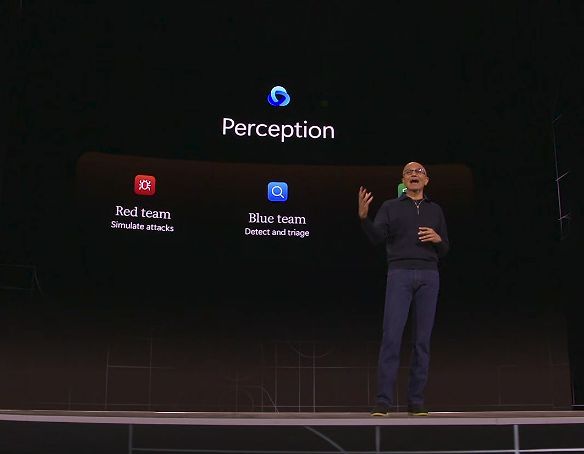
Microsoft opened its Ignite event on Tuesday with CEO Satya Nadella announcing general availability of Word, Excel, and PowerPoint inside Copilot, which he described as "the new OS for work." The rollout is part of what the company calls a "frontier ecosystem," and it moves forward a Copilot redesign first revealed in September. Users can now create documents, spreadsheets, and presentations directly within Copilot, and the resulting files stay editable in the corresponding Office applications.
The arrangement reverses the usual relationship between application and assistant. Historically an app like Word was the main event and a helper like Clippy sat alongside it; in Microsoft's framing, agents now drive the work while the Office packages act as plugin components. Underneath sits an organizational knowledge layer that pulls context from emails, meetings, calendars, chats, and files. For developers, that suggests Office file formats increasingly become an output target for agent workflows rather than the place where work is initiated, with the knowledge layer as the thing that determines quality of output.
The centerpiece of the agent push is Copilot Autopilot, which Microsoft describes as a persistent, proactive agent for personal productivity. It is a cloud-based autonomous agent that users delegate responsibilities to rather than one-off tasks, and it can be authorized to operate across services including email and calendars to complete assigned work as part of its role. Billing will be usage-based through Copilot Credits, but final pricing was not announced ahead of general availability. That gap matters for budgeting: teams piloting autonomous agents will face a consumption cost model they cannot yet model precisely.
Microsoft IQ was also announced as generally available. It is an intelligence platform that houses Work IQ, a context layer meant to help agents understand a company's communications, relationships, and ongoing work. Nadella characterized Work IQ as possibly a company's most valuable database, describing its understanding of people, their relationships to others, emails, meetings, chats, and projects. Whether organizations want autonomous agents reading internal documents and messaging data is left to internal IT review, which is a significant caveat: the value of the context layer scales with how much corporate data an organization is willing to expose to it.
Copilot Workspaces, a collaborative environment now in the Frontier early-access program, will soon support bringing personal Autopilot agents into shared workspaces. Nadella framed the shift as moving AI from single-player to multiplayer, where people and agents pursue a common goal with shared context. In practice this implies permission and ownership questions: when a shared workspace is jointly edited by humans and delegated agents, it is not obvious from the announcement how attribution and access boundaries are enforced.
Trust was the third pillar, and Nadella treated it unusually candidly. He said alignment and mechanistic understanding of models remain elusive, and that by definition you cannot simply trust such powerful technology. The proposed answer is architectural: separate the supply of intelligence from the authority granted to it. Microsoft says each Autopilot agent will carry a unique ID, administrators can restrict permissions or block an agent outright, all agent activity is logged for human review, and Autopilot can request human approval before certain actions. This suggests a model in which safety comes from bounding what an agent may do rather than from the agent's own reliability, which is a defensible engineering stance but shifts the burden onto how well those bounds are configured.
Alongside the guardrails, Microsoft announced an AI Transparency Initiative with more than 40 companies, including Adobe and Mastercard, aimed at open industrywide standards for AI governance and security. Nadella described the goal as an open standard that makes AI safer, more transparent, and more accessible. Standards work of this kind tends to matter most once agents cross organizational boundaries, so its practical effect will depend on adoption beyond the founding partners.
Microsoft also expanded Agent 365, its existing control plane for managing AI agents across enterprise environments, extending identity, security, and management systems to agents with what it calls observability at every layer of the stack. Paired with it is Agent 365 Business Analytics, which Nadella likened to an ERP system for AI usage, showing what drives spend and connecting that spend to business outcomes. Microsoft acknowledged that estimates of assisted work hours come from a model rather than a direct measurement of time saved, a meaningful concession as customers evaluate return on AI investment. Judson Althoff, CEO of Microsoft Commercial Business, claimed that anything possible with Claude or ChatGPT can be done better with Copilot for less.
Nadella briefly addressed the prior week's outage that disrupted access to services including Exchange Online and Teams worldwide, calling it a reminder of how critical digital infrastructure is and saying Microsoft has work to do. The company also pointed to its previously discussed community-first AI infrastructure plan amid scrutiny of data center projects. That is a noticeable pairing: a keynote asking organizations to hand more autonomy to software agents arrived shortly after a reminder of how dependent those organizations already are on Microsoft's uptime.
Why it matters: Developers and product teams building on Microsoft's stack now face a platform where Office documents are generated by agents and governed by identity and logging controls, so integration work shifts toward permissions, context sources, and spend telemetry rather than document authoring. The unresolved pricing for Autopilot and the model-based nature of the usage analytics mean ROI cases will be estimates, at least initially. The main practical risk, in my reading, is governance: the controls are only as good as the policies administrators write, and the knowledge layer's usefulness depends on data access decisions many organizations have not yet made.
Based on reporting from the original publisher. Visit the source for full context and later updates.
Publisher excerpt
Word, Excel, and PowerPoint now live inside Copilot; always-on agents are next.