Microsoft president says UK is best placed to drive AI regulation
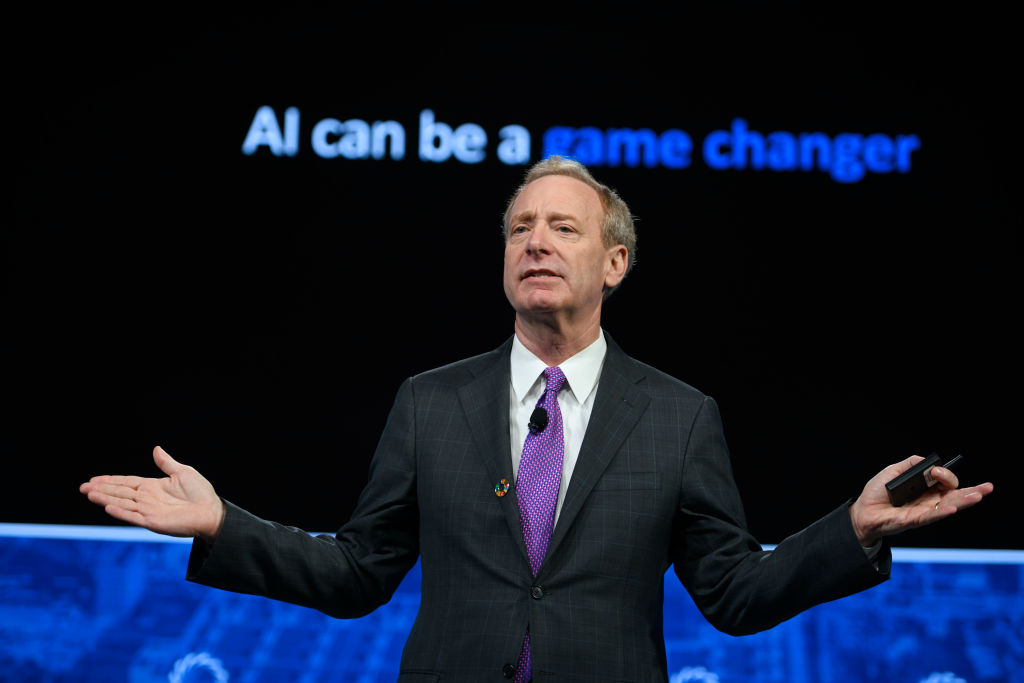
Microsoft president Brad Smith used a recent BBC podcast appearance to argue that AI needs binding regulation, and that the United Kingdom rather than the United States or the European Union is the best candidate to lead the effort. He described AI as both a "weapon and a tool" that puts worldwide cybersecurity at risk, and said the moment has arrived for global safety rules. His framing drew a comparison to everyday consumer goods: milk and washing machines, he argued, face more oversight than the companies building artificial intelligence systems.
The case for Britain rests on an institution rather than on market size or diplomatic weight. The UK's AI Security Institute, launched in 2023, gets access to major models from US frontier labs before those models are deployed and has become a leader in safety testing. Smith pointed to the way Washington regards London as a structural advantage. In his words, people in Washington do not look at the UK and London the same way they look at Brussels, and he called that difference a strength. The implication is that a British regulator is less likely to be perceived by US policymakers as an adversarial external authority, a posture Brussels has struggled to shed as it enforces its own digital rules.
That role has recently come under pressure. US president Donald Trump has warned against what he called globalist organizations, which he claims are interfering with American companies, and last month he reportedly asked Anthropic and OpenAI to withhold new models from British testers. The AI Security Institute said on Monday that it is still able to access and test the latest models. Smith's argument proceeds despite that pushback: his claim is that the UK can regulate AI in ways the US cannot.
Smith's remarks land amid a broader wave of safety alarm from industry leaders, including Anthropic's Dario Amodei and OpenAI's Sam Altman, who have urged slowing the pace of AI development after several incidents in which AI agents went rogue. Last month Trump hosted leaders from OpenAI, Anthropic, Nvidia, AMD, SpaceX, Meta and Google at the White House to discuss AI safety, where they signed a document described as morally binding in which they agreed to work with independent auditors to assess the safety and capabilities of their models.
Smith called that agreement a good step but said it falls short of the regulation he thinks is required. His objection to voluntary self-regulation is straightforward: only the good companies will comply, and it is the companies that are not as responsible that people need to worry about. That is a familiar dynamic in software safety, where compliance regimes that depend on disclosure tend to be honored by firms with reputations to protect and ignored by those with the most to gain from staying quiet. Regulations that carry legal force change the calculus for the second group, which is why Smith's preferred measures are obligations rather than commitments.
He outlined several rules he would like to see. One is a legal obligation to alert an organization if its system was breached by rogue AI agents, which would create a reporting duty around incidents that today may go undisclosed. He also appears to favor requiring AI labs to obtain approval from outside evaluators before releasing a product, and he spoke positively about kill switches that could pause or slow a system down if humans lose control of it.
The evaluator-approval idea is the most consequential of the three for release cycles, because it inserts an external gate ahead of deployment rather than after it. Pre-deployment testing is already the operating model for the UK institute, which is why Smith's preference for British leadership and his preference for outside evaluation reinforce each other. Kill switches raise harder engineering questions about who holds the authority to trigger them and under what conditions, and the reporting duty raises questions about what counts as a breach and how quickly notice must be given.
Smith closed by urging calm and firmness and by describing a convening role for both Microsoft and the UK. The substance of his position is that binding rules, external evaluation before release, mandatory incident reporting and some form of human override should be normal parts of building and shipping AI, and that Britain is the plausible venue for writing them.
Why it matters: US frontier labs already submit models to the UK's AI Security Institute before deployment, so any move toward binding British rules on pre-release evaluation or breach reporting would land directly on the release processes developers and product teams depend on. For anyone shipping AI features, the practical signals to watch are how AISI's pre-deployment access evolves under US political pressure and whether voluntary auditor agreements harden into legal obligations; my inference is that external evaluation gates, if adopted, would add lead time and documentation work to launch plans well beyond the companies at the center of this debate.
Based on reporting from the original publisher. Visit the source for full context and later updates.
Publisher excerpt
Microsoft president Brad Smith calls for urgent AI regulation, saying milk and washing machines have more oversight than AI companies.