ICE plan to buy robot dogs spurs protest from hundreds of Boston Dynamics employees
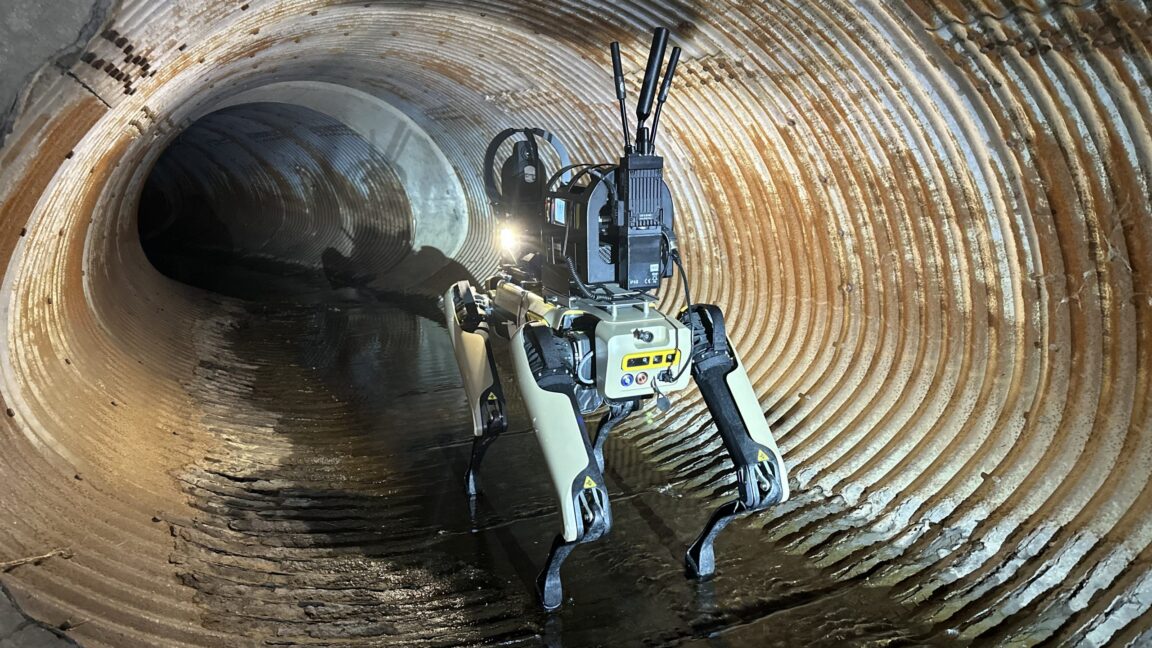
More than 300 Boston Dynamics employees signed a petition urging executives to stop the company's involvement in a sale of its Spot quadruped robots to US Immigration and Customs Enforcement, but leadership declined to back out. Workers sent the letter to executives in early September and shared copies with The Boston Globe and WBUR. The signers comprise roughly a fifth of the company's approximately 1,400-person workforce, and half the signatures were anonymous.
The contract itself was awarded on September 25 by the Department of Homeland Security, which directed $1.3 million to Radeco, a Connecticut company, to supply ICE with modified versions of Boston Dynamics' quadrupeds. The deal covers four Spot robots, reworked by Radeco and marketed under the name Cerberus.
According to the contract, the Cerberus platform is meant to detect radiation, toxic gas leaks and explosive threats in urban environments or disaster zones, and to support remote observation and inspection missions. Its central upgrade is an oxygen sensor intended to confirm that air is breathable when personnel enter confined spaces such as tunnels. The robot also carries a camera with 30-times zoom, 360-degree cameras and infrared thermal imaging. An optional Spot robotic arm lets it manipulate objects and open doors, and can extend to provide additional camera views. The contract describes the machine as able to navigate complex industrial settings on its own and run repeatable autonomous missions with minimal human intervention.
The purchase was justified in the contract as supporting Homeland Security Task Forces working on counter-illicit cross-border tunnel operations and on dismantling human smuggling and trafficking networks attributed to criminal cartels, foreign gangs and transnational criminal organizations. Boston Dynamics has stressed that the robots would be used primarily by ICE's Homeland Security Investigations unit, which focuses on transnational criminal organizations, according to WBUR. The Brennan Center for Justice has documented that same unit as frequently involved in deportations of undocumented workers and workplace raids during the first Trump administration, between 2018 and 2021, before the operations were halted by Homeland Security Secretary Alejandro Mayorkas early in the Biden term. During Trump's second term, which began in January 2025, an executive order redefined the unit's primary mission and thousands of agents were again diverted to immigration enforcement and deportations, according to the Immigration Policy Tracking Project.
The petition pointed specifically to an ICE and Homeland Security Investigations workplace raid on September 4, 2025, that detained 475 primarily South Korean workers at the Hyundai Motor Group Metaplant America facility in Georgia. Hyundai Motor Group became Boston Dynamics' parent company after acquiring the firm in June 2021, and the petition argued the company cannot be proud of work used by an agency that, in its words, brutalizes civilians including some of its own colleagues at Hyundai. Signers described themselves as employees who normally enjoy demonstrating their work to friends and family and who take pride in changing perceptions of what robots can do. They also warned that the decision could cost the company teammates and make recruiting harder as it scales.
Boston Dynamics leadership stood by the contract, which according to The Boston Globe mainly involves the company providing technical support for the modified robots. Amanda McMaster, former interim CEO, told staff by email that the decision aligned with the company's purpose of ethically advancing intelligent machines in service of humanity, and asked workers to respect and accept it even in disagreement. A company spokesperson told Ars that Spot robots are tools that keep people out of harm's way, and that if the robot can help keep people safe, the company believes it should, regardless of political implications or personal feelings about the organizations involved.
McMaster pointed to the company's terms and conditions for Spot sales, which prohibit intentional use of the product to harm or intimidate any person or animal, as a weapon, or to enable any weapon. Boston Dynamics previously signed an open letter opposing weaponization of advanced-mobility general-purpose robots. The spokesperson said the company has worked productively with DHS and Homeland Security Investigations for years and that the unit has abided by the terms, adding that there have been no cases of a customer violating them among DHS and other public safety agencies. If misuse occurred, the company said it would void the warranty, refuse future software updates, terminate the license, pursue any available legal action and likely never sell to that customer again.
The dispute arrives as Boston Dynamics builds a $100 million advanced robotics and AI facility in Waltham, Massachusetts, near its headquarters, a project the company says will create 1,250 jobs by 2033. The spokesperson called the ICE contract a complicated and emotionally charged topic and said the company will keep welcoming employees with views across the political spectrum. Hyundai has kept its US electric vehicle production at the Georgia plant and still plans to deploy thousands of Boston Dynamics Atlas humanoid robots starting at its US facilities.
For developers and product teams, the episode is a case study in how usage restrictions are actually enforced in robotics. Terms of sale and end-user licenses are the main lever a vendor has once hardware is in a customer's hands; cutting off software updates and licenses is often more effective than legal action, since fleets depend on continuing firmware and support. This suggests that autonomy, sensor payloads and remote operation features will keep pulling robotics companies into procurement debates they cannot fully control, especially when a reseller configures the product for a specific agency. A likely trade-off is that tighter end-use vetting narrows the public-safety market while reducing reputational and retention risk; how Boston Dynamics balances the two will be watched closely by both customers and its own workforce.
Why it matters: Robotics vendors selling into government and law enforcement now face visible internal and public scrutiny over who uses their machines and for what, and the outcome here rests on contractual use restrictions rather than technical limits. Teams building hardware or autonomy software should expect procurement deals to be read as statements about company values, with hiring and retention consequences that the petition signers explicitly raised. For buyers, the reliance on a third-party integrator to modify commercial robots means accountability is split between the platform maker and the reseller, an arrangement likely to draw more attention as autonomous systems enter public safety work.
Based on reporting from the original publisher. Visit the source for full context and later updates.
Publisher excerpt
US robotics company stands by ICE deal as more than 300 employees warn of risk.