Quick Study
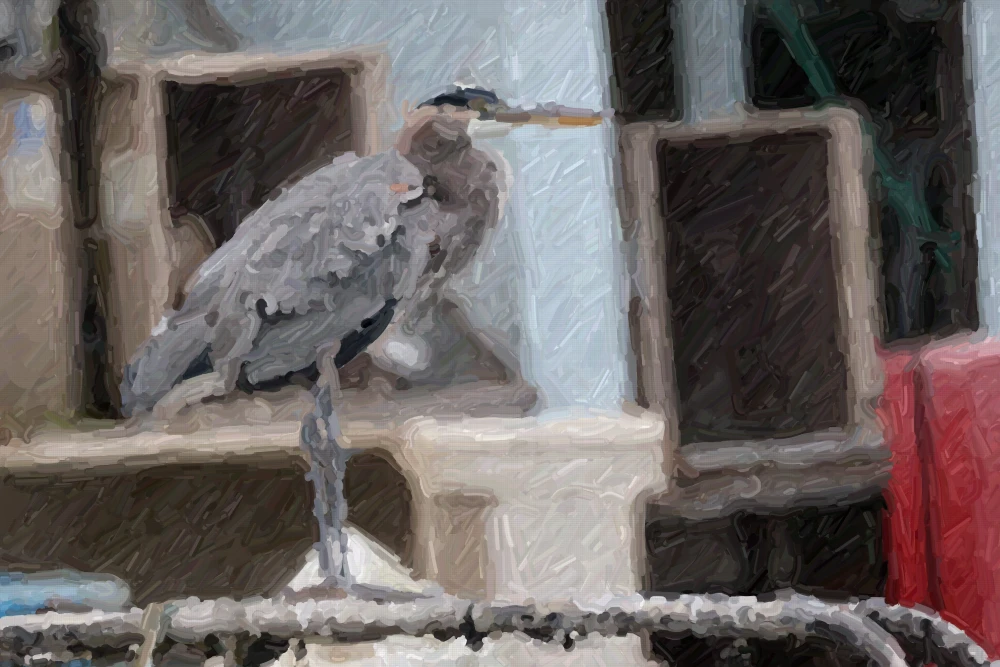
Simon Willison has published Quick Study, a browser tool that takes a photo and rapidly paints a version of it onto a canvas element using a simulated paintbrush. He describes the build as the result of a prompt to Claude Opus 5.5 High asking for an artifact that opens a photo and repaints it this way within a few seconds. It is tagged as a tools experiment.
The tool relies on Sobel edge detection, a widely used image-processing operator that estimates gradients to find where brightness changes sharply, which typically yields the outlines and contours that give a painted rendering its structure. Willison notes it uses no external libraries beyond Google Fonts, so the painting logic runs on canvas primitives. He points to an earlier experiment in which Claude Fable simulated a watercolor illustration with P5.js, placing Quick Study in a line of similar generative-art tests.
Why it matters: The piece is a small but concrete example of one-shot prompt-to-tool building, useful for developers gauging what current models can produce for canvas-based graphics work. For product teams, it is a reminder that quick generative experiments can be assembled from plain browser APIs, though a demo built this way is a starting point rather than a finished feature (inference).
Based on reporting from the original publisher. Visit the source for full context and later updates.
Publisher excerpt
Tool: Quick Study Prompt to Claude Opus 5.5 High : Build an artifact where you open a photo and it rapidly (in a few seconds) paints a version of that photo using a canvas element and simulated paintbrush See also my previous experiment getting Claude Fable to simulate a watercolor illustration with P5.js. Quick Study uses Sobel edge detection , with no external libraries beyond Google Fonts. Tags: tools