AI disqualification yields new Nikon Small World in Motion winner
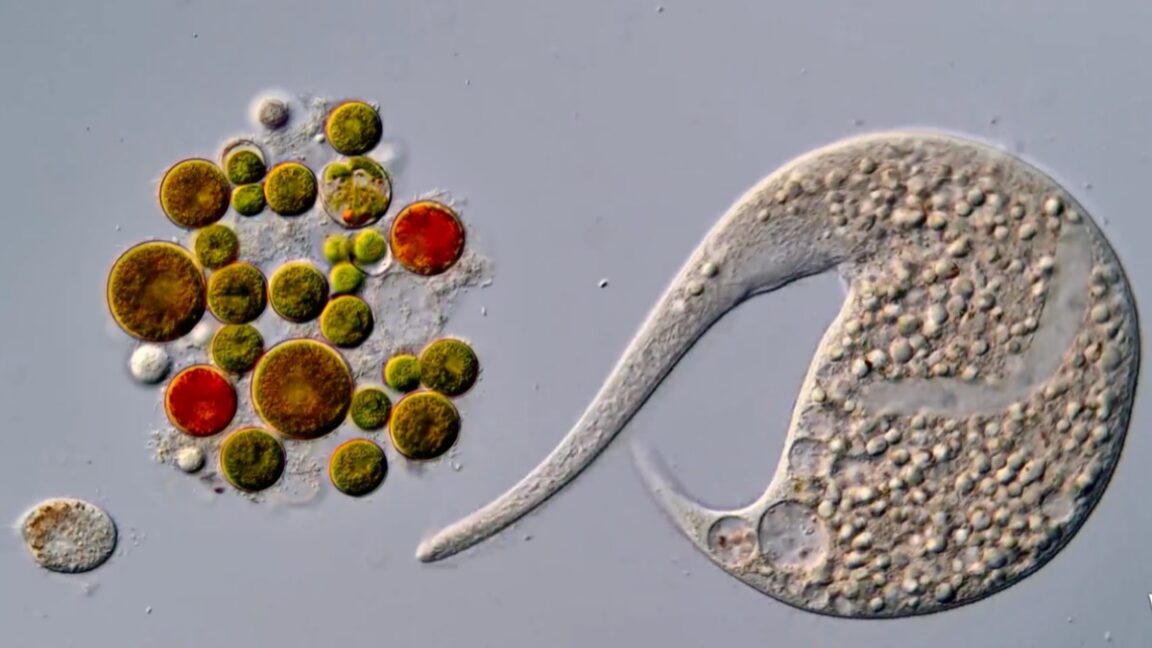
Nikon has stripped Ning Xu of Tsinghua University in China of first place in the Nikon Small World in Motion competition and promoted Nguyen Nam Nhat of Vietnam to the top spot. Xu's video had shown tiny cilia beating in the airways of a child with a rare respiratory disorder. After allegations surfaced about his use of AI in making the video, Nikon opened an investigation and concluded the entry did not comply with the competition's rules on generative AI. The company says it re-evaluated the video and supporting materials, consulted members of its judging panel, and adjusted the rankings on its website.
Nikon's statement frames the decision narrowly: it rests solely on the submitted video's eligibility under the published rules, and should not be read as a judgment of the entrant's professional reputation, scientific contributions or intent. The company also said advances in imaging and artificial intelligence are evolving rapidly and creating new challenges for organizations across many fields, and that this event showed the need for both Small World and Small World in Motion to revisit their rules and evaluation procedures for future entries.
How the case was questioned matters for anyone working with scientific imagery. According to a BBC report, some researchers raised concerns that Xu's video showed structural abnormalities, and that cell features appeared and disappeared in a way that would not occur in actual cellular biology. Others spotted what looked like AI watermarks embedded within the source files. Xu said he used AI to distinguish and visualize features in the reconstructed grayscale images, but denied that AI was used to generate the experimental movie, the cilia, or their motion. The gap between those two positions, using a model to enhance or segment an image versus using one to synthesize structures that were never recorded, is where much of the ambiguity in current competition rules sits. Nikon's disqualification turned on compliance with the generative-AI provisions rather than a finding about any specific pixel.
With Xu removed, the rest of the field moved up one position. Benedikt Pleyer of Bavaria, Germany, is now second, for a video of jellyfish larvae suspended in water droplets. Andrew Moore of the Howard Hughes Medical Institute in the US is third, with a video of synchronized cell division in neighboring cells. Patrick Hickey of Hypha Research Ltd. in Edinburgh, Scotland, is fourth, showing the dynamics of mitochondria and chloroplasts in Turtle Vine leaf cells. Igor Adameyko is fifth, with a video of a tiny, colorful sea slug, Cyerce kikutarobabai, on the move.
The competition itself dates back further than the video category. Small World in Motion was founded in 2011 as a spinoff of Nikon's Small World Photomicrography Competition, which has run since 1974. The still-photography contest came first; the motion version takes advantage of technology that now lets researchers capture movies and time-lapse sequences through the microscope. Both are described as showcases for the beauty and complexity of things seen through the light microscope, one through still photographs and the other through photovideography.
For photographers and researchers, the practical takeaway is that microscopy competitions are starting to police AI use explicitly, and that documentary standards are being applied to tools that were previously treated as ordinary image processing. A likely trade-off is that rules will need to draw clear lines between permitted computational enhancement, such as denoising, deconvolution or segmentation, and prohibited synthesis, because the two can look similar in a final clip. Forensic signals such as embedded watermarks or implausible structural behavior may become part of how entries are reviewed, which raises its own questions about how much scrutiny is reasonable for a contest judged partly on aesthetics. Nikon has said it intends to revisit those rules and procedures, though it has not described what changes are coming.
Why it matters: labs and imaging groups that enter photomicrography contests, or publish microscope video more broadly, now have a concrete precedent that undisclosed generative-AI use can cost a top prize even when entrants describe the tool as a visualization aid. Product and research teams working on scientific imaging pipelines should expect funders, journals and competitions to ask for clearer disclosure of where AI sits in a processing chain. The distinction Nikon is enforcing, between enhancing recorded data and generating structures, is likely to become a standard question in review, though the source gives no indication of how future rules will define that boundary.
Based on reporting from the original publisher. Visit the source for full context and later updates.
Publisher excerpt
New winner is Nguyen Nam Nhat of Vietnam for video of a roundworm and single-celled Dileptus.