How artificial neural networks build their own learning machinery
A paper published Oct. 9 in the journal PNAS argues that the most meaningful measure of an artificial neural network's biological plausibility is how well it can organize itself, without a developer dictating how its connections should change. The work comes from scientists at MIT's McGovern Institute for Brain Research and the K. Lisa Yang Integrative Computational Neuroscience (ICoN) Center. The authors are Qianli Liao, a K. Lisa Yang ICoN Center Postdoctoral Fellow in the labs of MIT professors and McGovern Institute members Tomaso Poggio and Mark Harnett, who is a co-first author alongside MIT Research Scientist Liu Ziyin and graduate student Yulu Gan.
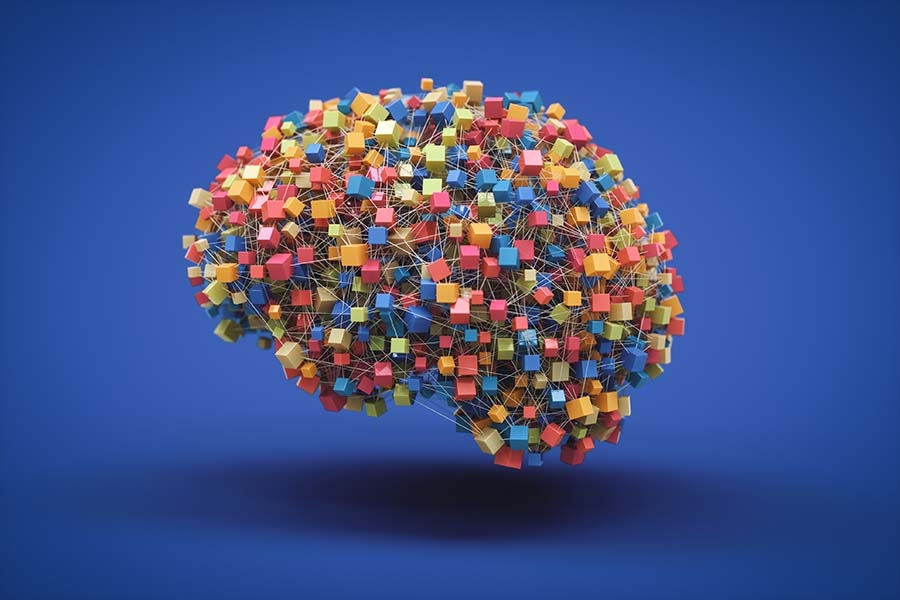
The central claim is that an artificial network can build its own learning machinery. Given simple instructions about how and when connections should change, a collection of randomly connected units can reshape itself into an effective information-processing network that learns from the data it is trained on. The researchers present this self-organization, rather than raw task performance, as the property that should be used to judge whether a model has anything to say about how brains learn.
The motivation is a gap between modern AI and neuroscience. Current AI systems perform well, but as Liao notes, they do not necessarily rely on a learning algorithm the brain uses. In standard training, engineers write the rules governing how connections are adjusted as the network processes data and receives feedback about its errors. That is a powerful engineering choice, the authors caution, but it may not illuminate biological learning, because the brain has no external designer or architect and must organize itself.
To test whether self-organization is achievable, the team built a network that begins as multiple layers of randomly interconnected neuron-like units. Within each layer, every unit follows the same rules about how connections should be adjusted. Interacting through those rules alone, the units develop behavior rather than having it imposed. The rules resemble those thought to rewire brain circuits during learning. A key example is the principle often summarized as neurons that fire together wire together: when two connected neurons are activated at the same time, the connection between them strengthens.
The network, governed by rules of this kind, learned to recognize patterns and classify images. The authors describe learning in their model as enabled by self-assembling motifs that emerge according to the simple rules and then act as building blocks for functional circuits. As learning proceeded, those motifs reorganized themselves using an optimization strategy similar to gradient descent, the approach used in most modern machine learning, in which connections are gradually adjusted in response to errors to improve performance.
That comparison matters because most modern AI carries out gradient descent through some form of back-propagation, an algorithm neuroscientists consider unlikely to be used by the brain. The team compared its self-organizing network against networks designed to learn through back-propagation and found that it performed at a similar level. In other words, the biological plausibility the authors are after did not come at a large cost in task performance, at least on the pattern-recognition and image-classification tests described.
Poggio frames the potential payoff as a mechanistic bridge. If the synaptic motifs the team proposes are in fact used by the brain to accomplish what back-propagation does for artificial networks, he says, then there would be a strong connection at the level of fundamental mechanisms between artificial and natural networks, and between machines and brains. Liao is careful about the scope of the claim: a self-organizing network does not necessarily learn the way the brain does, but it is a critical starting point for biological plausibility. His framing is that self-organization is the first high-level framework, and that once it is established as a measure, the field can move to the next question.
Context for developers: back-propagation works by computing gradients of an error signal through the layers of a network using the chain rule, then using those gradients to update weights. It requires a well-defined, differentiable path from output error back to each parameter. Brains appear to lack that kind of global, precisely routed error signal, which is why biologically oriented researchers look for local rules, such as strengthening a synapse when the neurons on either side are active together. The trade-off this paper explores is that local rules are more plausible biologically but historically harder to turn into systems that learn as well as gradient-based training. Reporting similar performance is therefore the notable part, since it suggests the plausibility gap need not imply a capability gap on the tasks tested.
There are limits to keep in mind. The demonstrated capabilities are pattern recognition and image classification, not the broader range of tasks associated with large modern models. The self-organizing networks are compared against back-propagation-trained networks at a similar level rather than outperforming them, and the paper's argument about biological plausibility rests on the resemblance of the rules and motifs to known neuroscience, not on direct measurements in living tissue. The authors themselves treat self-organization as a starting framework rather than a finished account of brain learning.
A likely direction of follow-up, based on what the paper states, is to test whether the proposed synaptic motifs correspond to real circuitry and to examine how the rules that reshape connections might differ across brain regions or change as the brain matures. Neuroscientists are already working to understand how those rules operate and how aging or disease might disrupt them, a step toward therapies and prevention. Liao also points to brain-computer interfaces, which aim to restore communication when language abilities are lost or to let paralyzed patients control neuroprosthetic limbs, as applications that depend on knowing the rules behind neuron-to-neuron interactions rather than merely designing a circuit that works well.
Why it matters: For neuroscientists, this offers a concrete criterion, self-organization, for deciding which machine models are worth studying as models of the brain, and a demonstration that such a model can classify images at a level comparable to back-propagation-trained networks. For machine learning practitioners, it is an early signal that locally governed, self-assembling networks may be a viable alternative worth exploring, though the reported results cover only pattern recognition and image classification, so it is an inference rather than a stated result that these ideas would extend to larger or more general systems. The team's stated aim is understanding the brain, with improved machine learning framed as a possible longer-term benefit.
Based on reporting from the original publisher. Visit the source for full context and later updates.
Publisher excerpt
Machine-learning networks can learn without detailed instructions from a designer. Those that do may offer insight into how the brain reorganizes itself during learning.