This game-playing AI is the new champ at Stratego
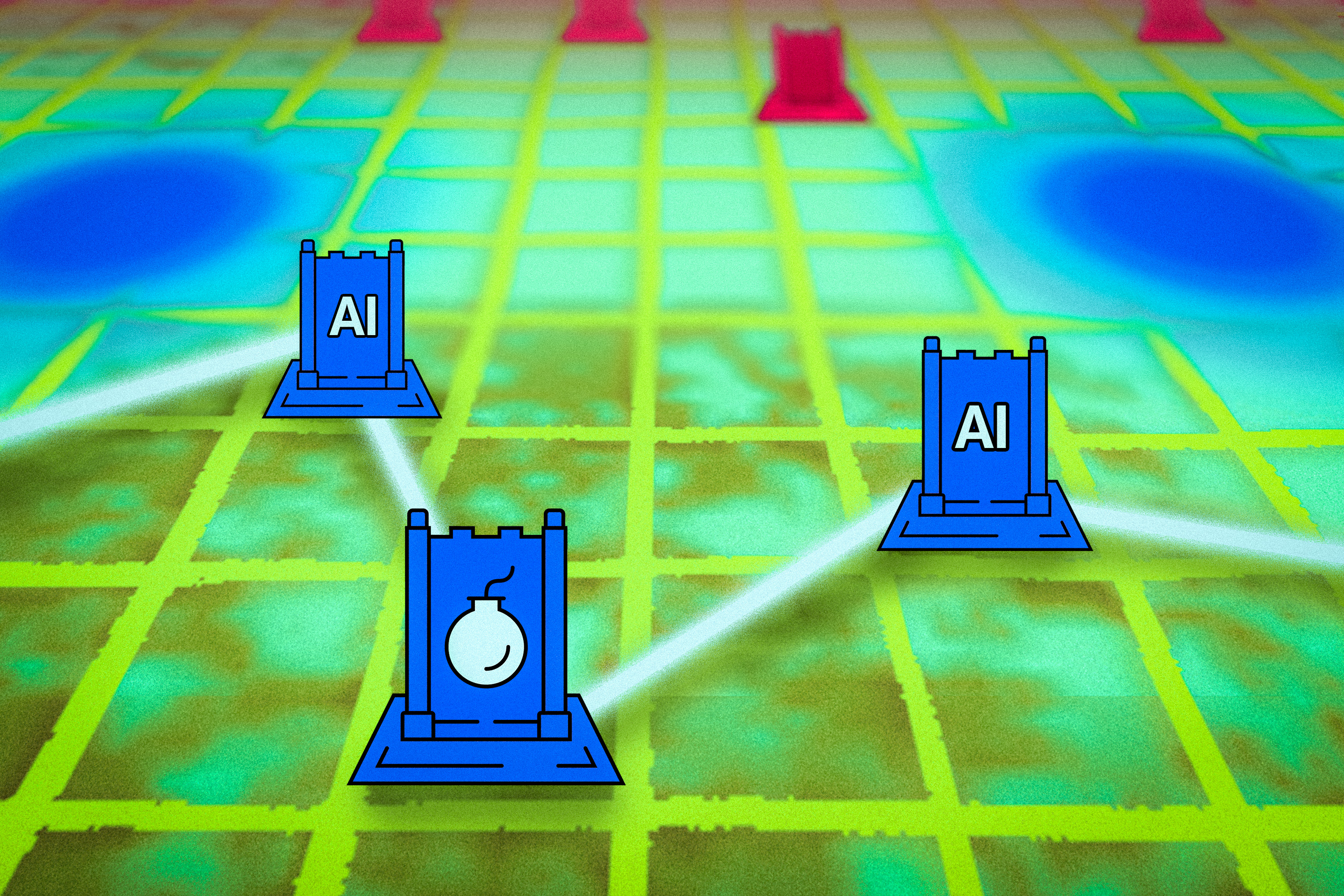
Researchers from MIT, Carnegie Mellon University, New York University, and Stanford University have developed an AI system, named Ataraxos, that defeated top-ranked human players of the board wargame Stratego by a large margin. The research appears in Nature. Gabriele Farina, an assistant professor in MIT's Department of Electrical Engineering and Computer Science and a principal investigator at the Laboratory for Information and Decision Systems, is the senior author. The lead author is Samuel Sokota, a graduate student at Carnegie Mellon. Co-authors include Eugene Vinitsky, an assistant professor at NYU; Zico Kolter, a professor at Carnegie Mellon; Hengyuan Hu, a graduate student at Stanford; and Zhiyuan Fan, an EECS graduate student at MIT.
Stratego is a two-player game of imperfect information in which piece identities remain hidden until pieces collide, at which point the lower-ranking piece is eliminated. Its possible piece configurations number more than 10 to the 66th power, which the researchers note is exponentially greater than in chess. Ataraxos was trained using self-play reinforcement learning to learn a blueprint strategy, then uses decision-time planning with a generative model to estimate the likely identities of the opponent's hidden pieces before selecting each move.
According to the researchers, Ataraxos beat the strongest Stratego player in the world by a record margin of 15-1-4 and achieved a 39-2 record against top human players at the Stratego world championship. Farina stated that the system reaches strictly higher playing strength than DeepMind's DeepNash while using less than one hundredth of the training examples and less than one thirtieth of the self-play games.
The researchers also adapted Ataraxos for Barrage Stratego, Hanabi, and Dou dizhu, reporting superhuman performance in each instance. Funders include the Office of Naval Research, the National Science Foundation, the NYU Department of Civil and Urban Engineering, the C2SMART Center, and a Schmidt Sciences AI2050 Early Career Fellowship. The researchers say they want to build interpretability measures into Ataraxos so it can explain its decisions in a way humans can understand.
Based on reporting from the original publisher. Visit the source for full context and later updates.
Publisher excerpt
Able to defeat top-ranked human players and more efficient than other models, the new system could help decision-makers in military maneuvers or business negotiations.