Fujifilm to boost tape production 5x as AI fuels archiving demand
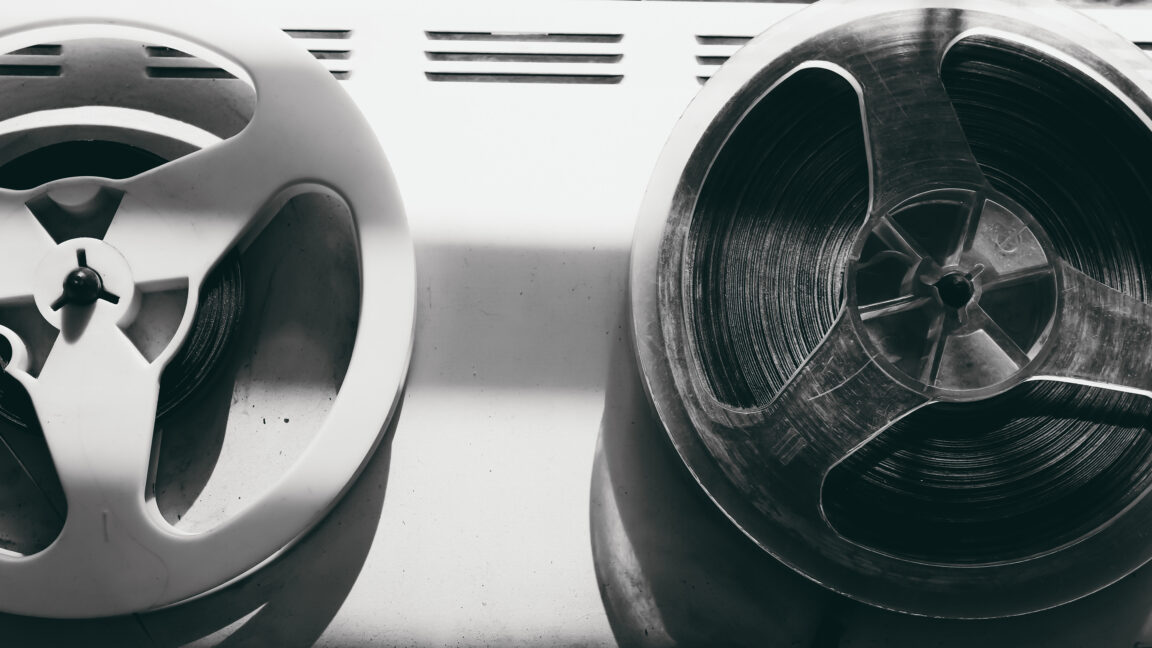
Fujifilm said in an announcement released Thursday that it will spend roughly 10 billion yen, about $63 million, to grow its magnetic tape production capacity fivefold. The baseline for that increase is the company's fiscal year 2025 output. The company ties the added archiving demand to the spread of generative AI, which it describes as driving exponential growth in data needs worldwide.
The money goes to the Kanagawa Factory's Odawara site and, according to Fujifilm, amounts to the largest investment it has made to date in facilities dedicated to LTO tape. The program spans fiscal years 2026 through 2028 and covers both manufacturing expansion and additional personnel. The bulk of the new output is aimed at the latest-generation product, FUJIFILM LTO Ultrium10.
LTO stands for Linear Tape-Open, an open format developed by a consortium of vendors. Data is written in parallel tracks along the length of a cartridge, and generations are numbered, with each step typically bringing a substantial jump in native and compressed capacity. LTO Ultrium10 is the current generation; figures for Generations 11 through 14 are consortium projections for future media. Tape is a sequential-access medium, so it suits streaming large volumes to and from storage rather than random reads and writes, which is why it sits in archival and backup tiers rather than on primary storage.
Fujifilm's history with tape as a storage medium reaches back to the 1950s, and it released its first LTO Ultrium cartridge in 2000. In 2011 it was the first to commercially produce tape using barium ferrite magnetic particles. Its LTO Ultrium10, introduced in 2025, is the first in the line to use what the company calls fine hybrid magnetic particles, combining barium ferrite with strontium ferrite technology.
The company says major cloud service and data center operators have been expanding their use of tape because it stores large data volumes at relatively low cost. A cartridge can be pulled from a drive and kept in a drawer, a vault or a separate facility, and Fujifilm emphasizes that ability to air-gap media as a last line of defense for user data. In its words, given the sophistication of cyberattacks, tape is drawing more attention as a way to protect data from threats such as ransomware.
This suggests the AI buildout is reshaping storage demand well beyond GPUs and flash. Training corpora, model checkpoints, logs and compliance records are written once and rarely re-read, which is exactly the profile tape handles economically; the trade-off is latency, since retrieval means mounting a cartridge and often involves robotic libraries, so tape complements disk and object storage rather than replacing them. A fivefold capacity increase is a large commitment for a medium that many assumed was fading, and the three-year timeline implies Fujifilm expects archival demand to keep climbing past 2026. The stated driver is generative AI data growth as the company sees it.
Why it matters: Product and infrastructure teams planning long-term retention should expect tape to remain a live option in archival architecture, particularly for air-gapped copies that ransomware cannot reach. A capacity expansion of this size, if it lands on schedule, could ease supply constraints on current-generation LTO media over the next few years; that is inference, since Fujifilm does not discuss pricing or availability. Engineers designing tiered storage may want to keep tape in their cost models rather than treating it as legacy.
Based on reporting from the original publisher. Visit the source for full context and later updates.
Publisher excerpt
Low costs and offline security mean magnetic tape still has a job.