They war-gamed dimming the Sun. It went even worse than you think.
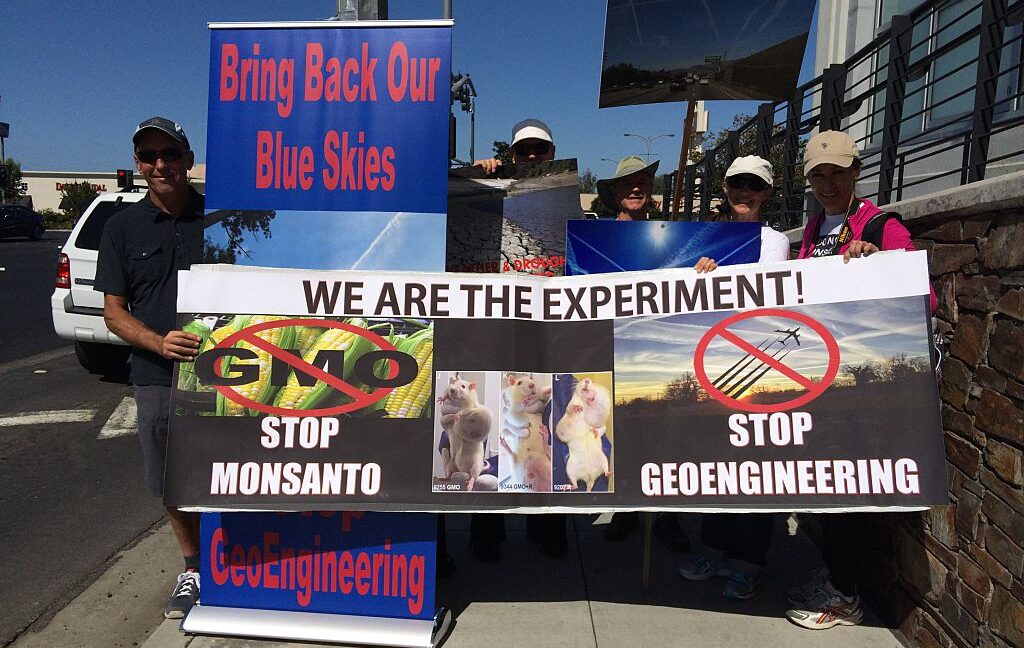
A war game held last September at Queen Mary University of London tested how the world might govern solar radiation modification, a set of technologies that would reflect sunlight to cool the planet. The exercise, called Exploring Geopolitical Tipping Points and Climate Cooling Strategies, brought together roughly two dozen foreign-relations experts, scientists, military personnel and former government officials. It was designed by Danielle Young, an assistant professor of international relations at Leeds University, and funded by the UK government-backed Advanced Research and Invention Agency. Climate researcher Colleen Golja attended as a technical adviser.
The setting was a hastily convened UN committee coordinating the international response to solar geoengineering. Play unfolded across simulated meetings set in the present, September 2027 and September 2028, with organizers introducing new advances in sunlight-reflecting technology at each step. Participants sat at tables labeled with the country or organization they represented: national governments, climate NGOs and nonprofits, indigenous groups and tech companies.
The first session set the tone. Distrust and disinformation dominated. As players tried to agree rules for outdoor experiments, the US and Chinese delegations said they could not sign a deal constraining research they considered in their national interest, nor one that would let their rival take the technological lead. Jeffrey Nielsen, a US Army major playing a national security attaché, described the position as worse than no deal at all being any deal that favors China.
Tensions rose when organizers handed Russian delegates an intelligence report about a plane near the Bering Strait believed tied to a US geoengineering research program. The US team, which was flying research missions in the game, accused Russia of disinformation. The US also became convinced China was conducting its own research; Beijing's representatives had sought language guaranteeing no retroactive punishment for past experiments. China then approached a player representing SpaceX about a technology-sharing program, and that player reported the approach to the US team, which demanded an international investigation. Talks collapsed, with the Canadian representative calling it a humiliating defeat.
Nielsen told WIRED he considered the outcome a victory, though Young said China was not, in the game, conducting experiments. Mutual suspicion left all parties believing the others were racing to build geoengineering capability. Nielsen said the session reflected the likelihood, in his view, of a geoengineering arms race, while stressing he spoke in a private capacity and not for the US government.
A former British diplomat with a national security background told WIRED that fear of falling behind a rival strongly drives research and development, but that this differs from deployment, and that solar radiation management, unlike nuclear weapons, has obvious benefits alongside poorly understood downsides. Cynthia Scharf, a former UN adviser who played the US government alongside Nielsen, said scientifically transparent international collaboration between China and the US might be the best available defense against a dangerous competition, but that she could not imagine it happening under the Trump administration.
Solar radiation modification aims to reverse warming by reflecting away a portion of incoming sunlight, for instance by spraying sulphur dioxide or another manufactured substance into the atmosphere. The cooling effect is widely accepted and would mimic large volcanic eruptions, which temporarily cool the planet by half a degree or more. The fallout is less certain and less equal: models predict drying in sub-Saharan Africa and more intense Atlantic tropical storms, and the cooling lasts only as long as it continues, after which temperatures could rebound sharply and unpredictably.
The field has shifted quickly from a speculative niche. Last year the US-Israeli startup Stardust Solutions raised $60 million, and in May it released details of inventions it says would let humans dial global temperature down as desired. In August, Elon Musk wrote on X that space satellites to control temperature and massive geo-engineering will be needed or it will be game over. Scharf told WIRED the governance decisions will arrive much sooner than policymakers imagine, within the next decade easily. Stardust CEO Yanai Yedvab told WIRED its lobbying job is getting easier because most policymakers are now aware of the technology, and the company maintains it will not run large-scale outdoor experiments or deploy before global governance exists.
Later sessions tried and failed to pull talks back to climate realities. Participants received frequent notifications of climate disasters that barely registered. Golja built an emulator demonstrating the best available science on how solar radiation management could affect regional weather; it was largely ignored, and questions directed at her usually sought data to support a position or frame a rival's proposal as reckless. On the final day, players scrambled to respond to reports of a major aerosol plume, caused in the game by a joint US-Saudi test of Stardust technology. A player representing an NGO called the Climate Futures Cooperative offered Golja money for a satellite and observational monitoring network; organizers had designed the group as fossil-fuel-backed, and its offer cratered her credibility, isolating the scientific voice. Russia, the US, SpaceX and Stardust figured out the group was not what it seemed, Young said, but assessed it was to their benefit not to draw attention.
No deal was ever agreed. European countries and Canada tried to build support for safeguards and open research, but delay tactics and strategic showdowns bogged the talks down. The researchers' final report concluded that strategic competition and state sovereignty drove the simulations, not climate concerns.
Simulations are not predictions, and outcomes depend on game design and the players. Many participants lacked first-hand diplomatic or national security experience, and organizers chose a UN forum that may be less effective than talks among smaller groups of major countries.
Developments since echo the exercise. In March, two papers from conservative US think tanks urged the Trump administration to lead on solar radiation modification and counter China, one invoking the term weather sovereignty. This month the Observer reported that the UK Ministry of Defence paid a deep tech security consultancy to research sunlight reflection, and last week the British government released its first official policy paper on the field, backing further research while stating it does not support deployment and does not plan to do so. During the game's time span, rising energy costs and political hostility undermined efforts to curtail fossil fuels, an extreme summer of drought and heat hit Europe, and in late August a glacier collapse on the Tibet-Nepal border killed more than 1,450 people.
Why it matters: Developers and product teams working on climate, geospatial monitoring, atmospheric sensing and satellite data should expect demand for verification and transparency tools, since the scenario shows trust collapsing without shared observational ground truth. Governance is arriving faster than most roadmaps assume, and companies in this space may face national-interest pressures that override scientific advice. A likely trade-off, by inference, is that commercial momentum in geoengineering will outpace the international rules meant to constrain it.
Based on reporting from the original publisher. Visit the source for full context and later updates.
Publisher excerpt
Solar geoengineering simulation shows what happens when geopolitics takes over.